Thinkthing Studio invited me. Jason asked me — credited on screen as 阿平, robotics educator (@cloofsiu) — to co-create for the launch video of the Superbank 15: a 15,000 mAh, 65 W power bank that claims to be the world’s lightest in its class.
What is the Superbank 15?
- 15,000 mAh capacity with 65 W output — billed as the world’s lightest 15,000 mAh 65 W bank
- 67 × 26 × 101 mm, 293 g
- Two USB-C ports: 65 W single-port, or 45 W + 20 W when both are used
- AVS adjustable voltage with 100 mV fine steps for better efficiency and less heat
- Two 1/4″ screw holes plus Super Mount accessories — the whole premise of the video: a power bank you can bolt onto things
- Now crowdfunding on Kickstarter
What I built for it
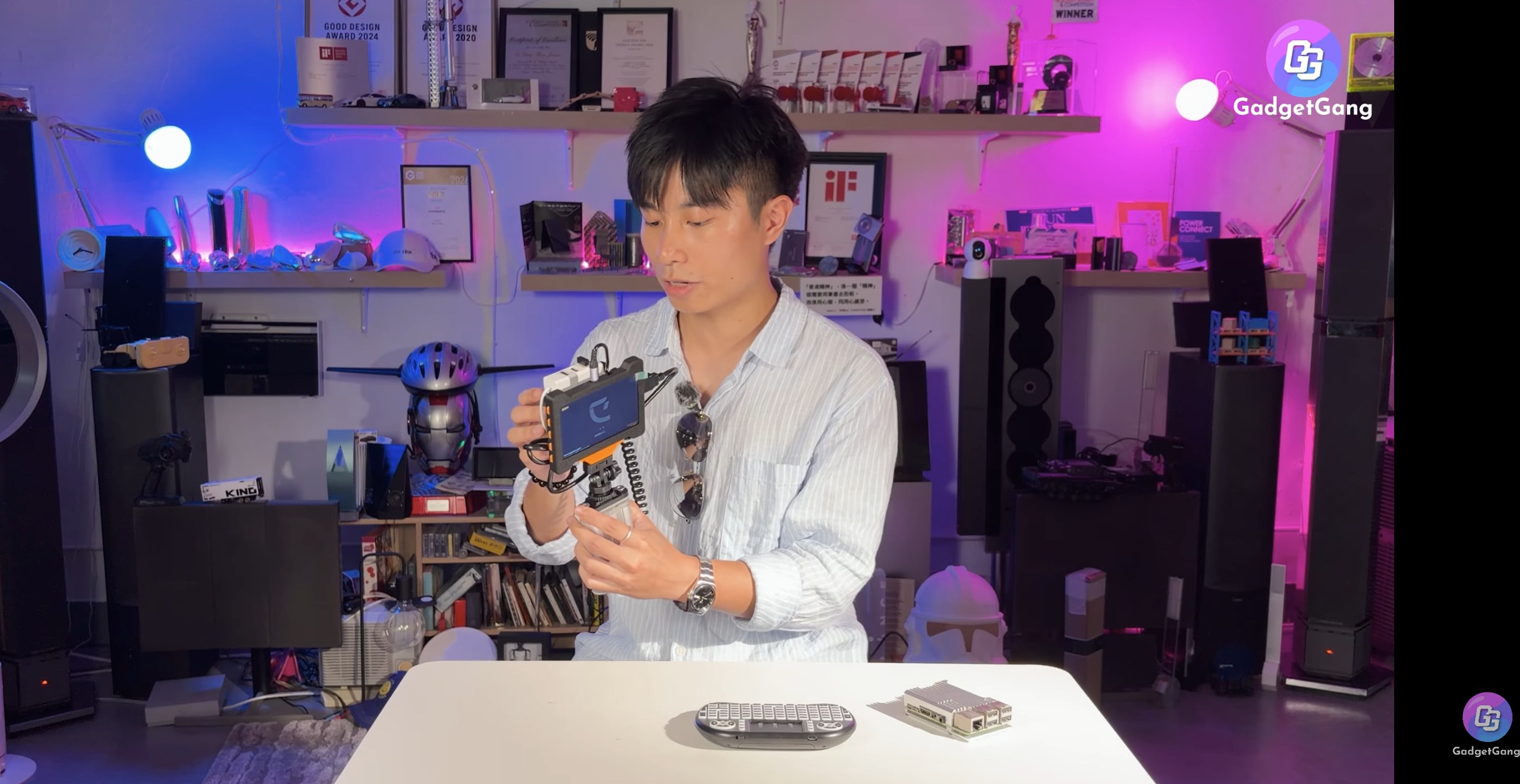
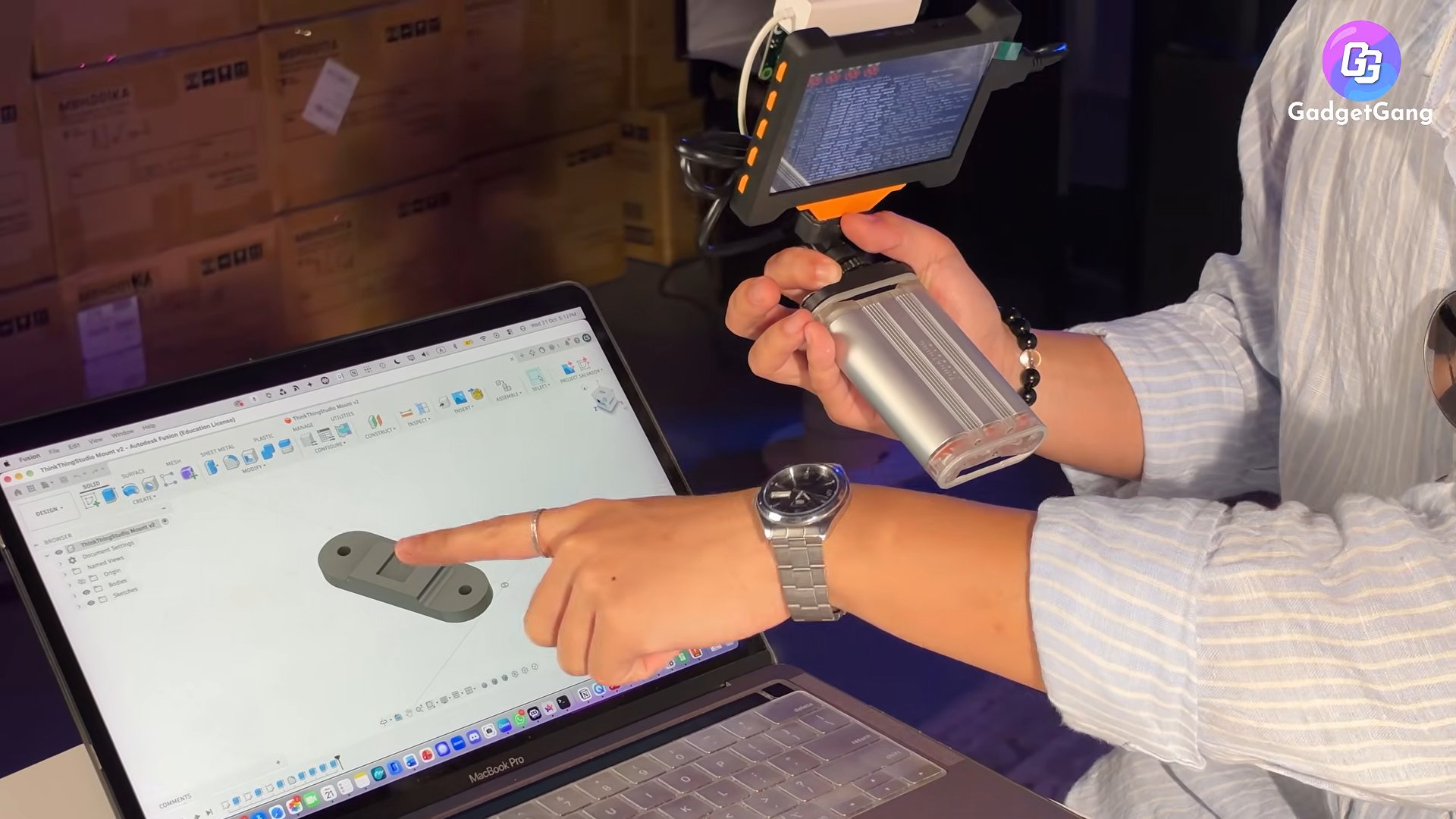
1. AI chatting robot — the Superbank as its handle and second battery. My prototype is a Raspberry Pi-based robot with a camera and a small screen (the one you see me holding at the top of this post). The Superbank 15 bolts straight onto it: it works as a grab handle and as on-board power, so the robot keeps talking while I carry it around. When a battery is also a structural part, the whole build gets simpler.
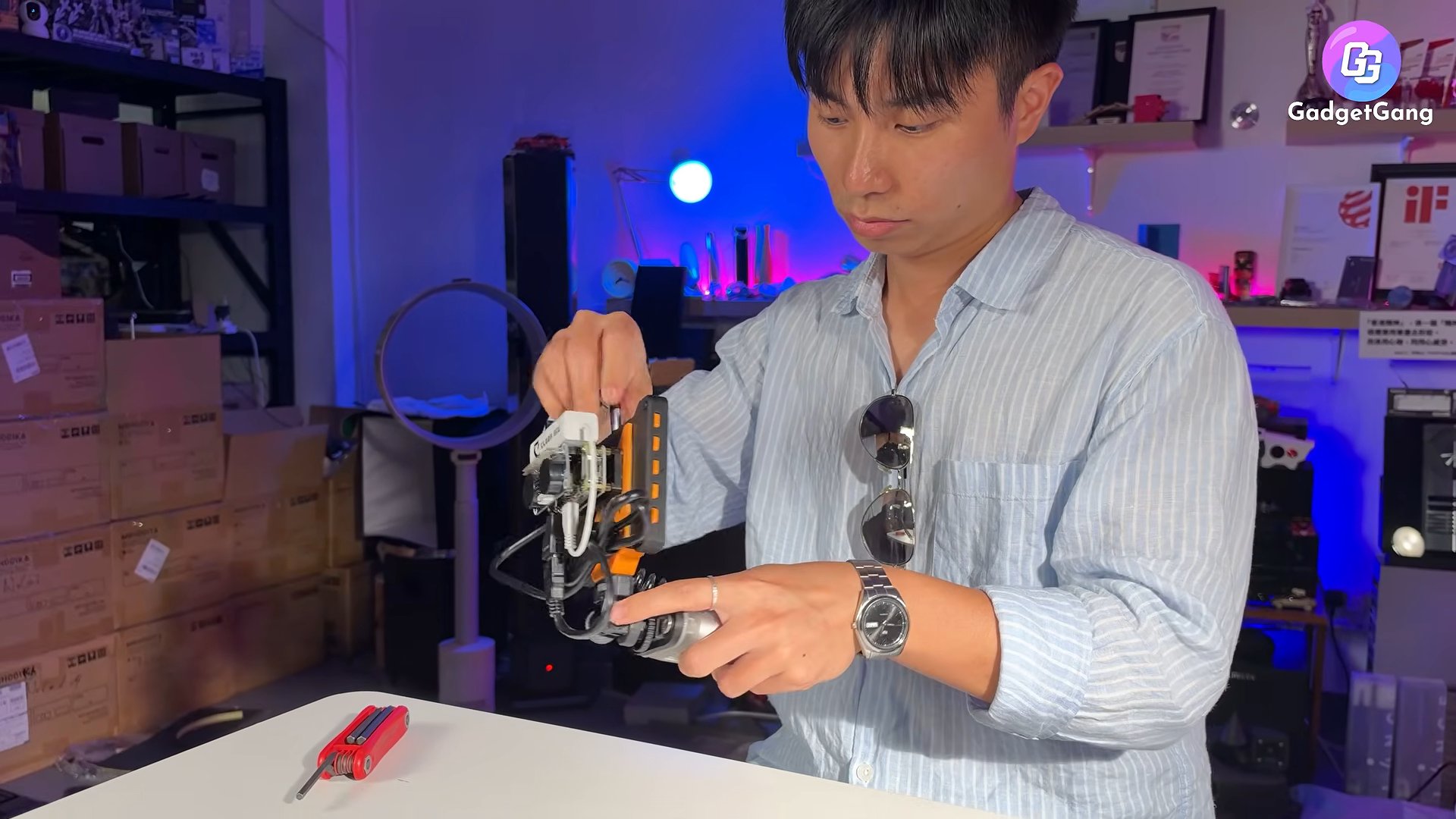
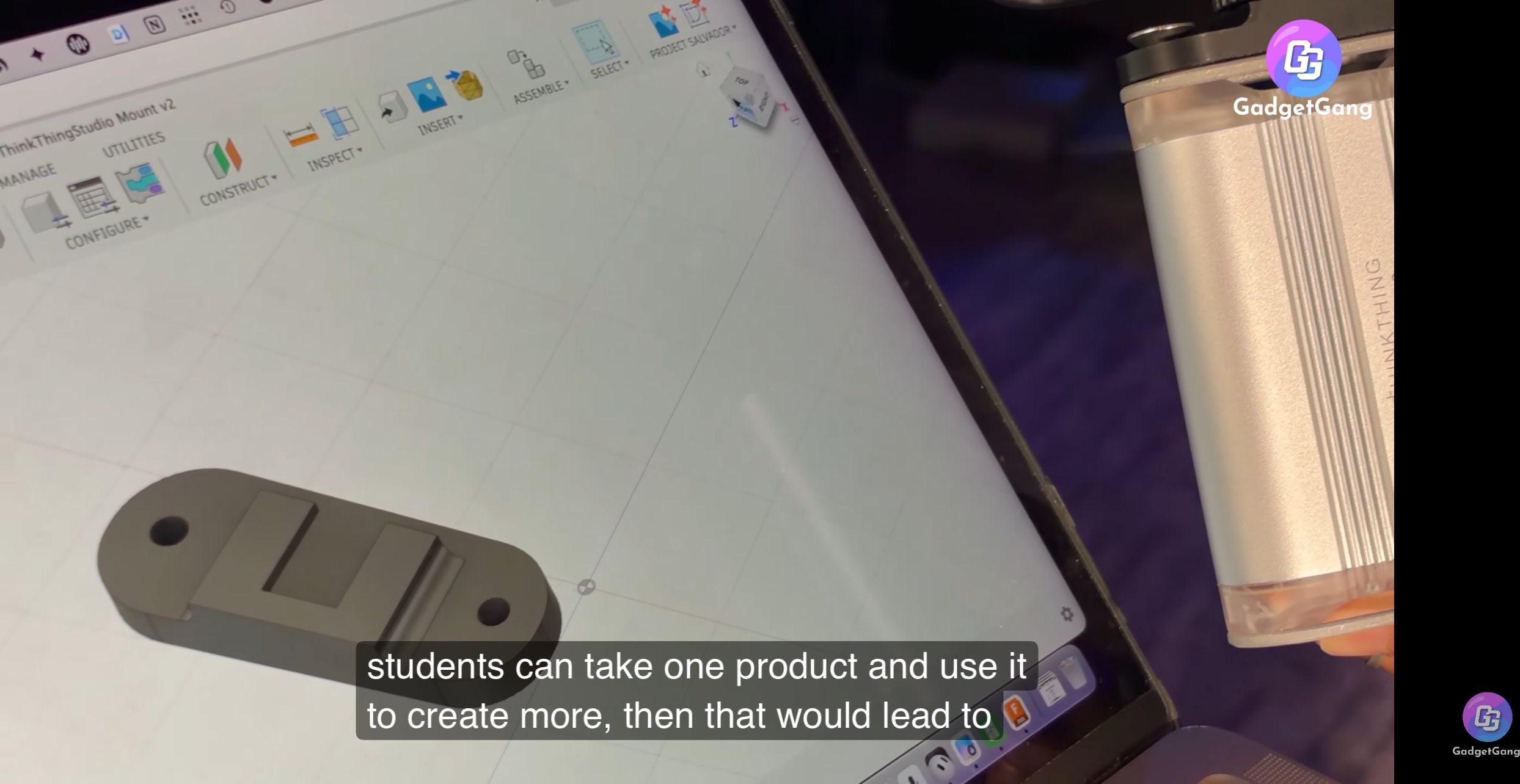
2. Portable Raspberry Pi rig. A Pi with an HDMI screen riding on top of the Superbank, joined by a 3D-printed mount I drew in Fusion — the same mount file open on my MacBook in the video. It is the competition-day answer to a familiar problem: remotes and field laptops always need backup power, and now the backup is part of the rig.
3. Folding soldering-iron stand. A portable iron powered straight from the power bank, with a folding stand I made (sponge at the back, magnetic module in the middle for swapping attachments). The goal is a repair station that fits in a pocket — no more dragging a cable back to a wall socket for every joint.
4. The teaching angle. My students already learn 3D modelling and CAD. A product with real mounting points means they can design one bracket and hold a whole project together — exactly the kind of assignment I want to set.
Co-creation
Jason’s approach was genuinely co-creative: he handed prototypes to makers, photographers and repairers before launch and folded our feedback into the product. The two screw holes exist because people like us kept asking where to bolt things.